

Dirty Realism.
I think, we made the future too beautiful.

My brain works in mysterious ways. I walk around the world being a little too curious for my own good, talk to too many people, read whatever comes across my desk, and then wait. At some point three or four random things start colliding in my head, they make this zing, and I feel something very strongly. That is usually when I know I have to write. These pieces always begin in reality.
This one was sponsored by three things colliding inside the same week.
The first was the name of the festival itself. House of Beautiful Business. I was in House of Beautiful Business this year, surrounded by exquisite thinkers, poets, entrepreneurs, philosophers. It is one of the few conferences that actually earn their name, because you are finally exposed to genuinely different perspectives.
The second was a line from one of the speakers, which I have not been able to put down since:“Individually we are beautiful. Collectively we are ugly.” Thanks Pinar Akiskalioglu - Founder of TAKK.
And the third was a street sign I walked past on day one, somewhere between two sessions. Two words, just printed on a sign in the street.
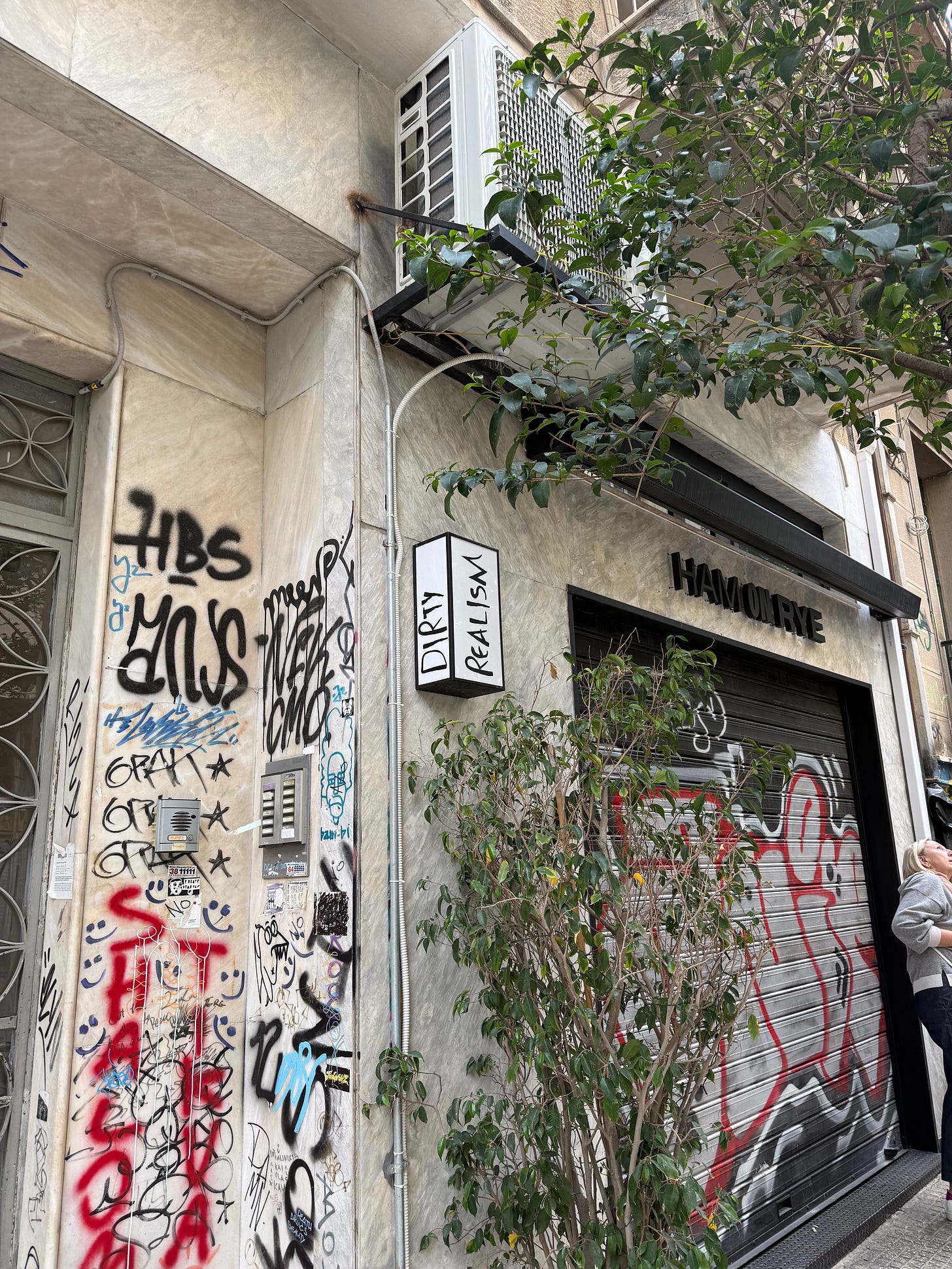
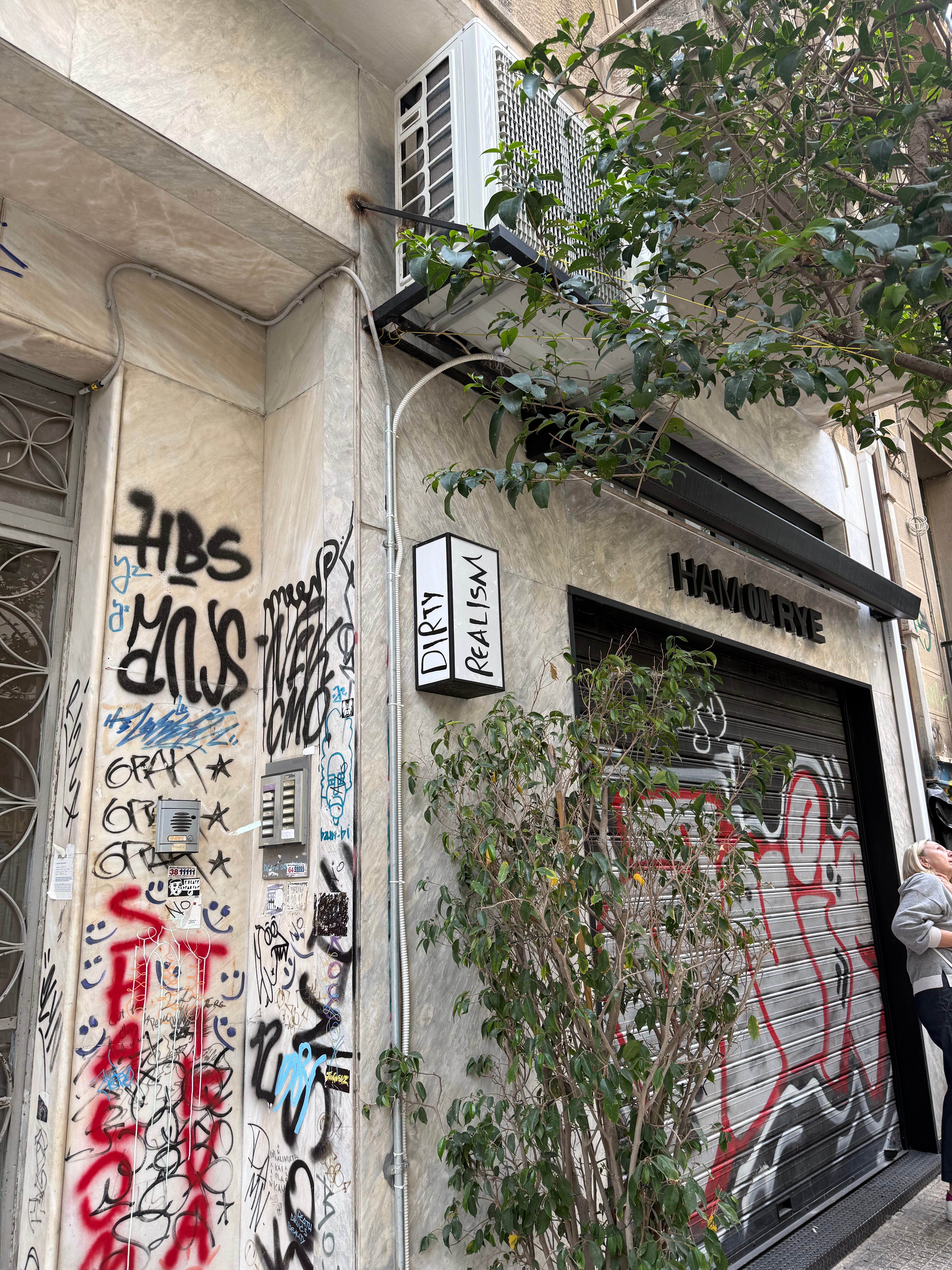
Here we are, a couple of days later, trying to make sense of this collision. Here is what I think they are saying together. We have been building beautiful things…beautiful festivals, beautiful visions, beautiful strategies…while what we actually produce together, collectively, in the rooms we share every day, is much uglier than any of us individually would tolerate. And the gap between the beauty we promise and the ugliness we live has gotten so wide that something has to give.
I think we made a big mistake. I think we made the future too beautiful. I think it is time for the era of dirty realism.
Think about what comes to mind when you hear leadership, vision, future. A glossy keynote video. Diverse smiling people in a sunlit office that does not actually exist anywhere. A roadmap with arrows pointing up and to the right. A North Star. A horizon. A 2030. That is the vocabulary of the future we have been sold.
But something about it feels unreal. Like one of those designer kitchens that are unbelievably beautiful and somehow completely uninhabitable at the same time. There are no fingerprints on the counters, no coffee powder next to the sink, no traces of anyone actually having been there. It makes you feel like a visitor in your own life, only able to bring the presentable parts of yourself, the ones that are exhausting to maintain for more than an hour.
This is what most corporate futures feel like. Beautiful and uninhabitable. You walk through them as a visitor and you leave as quickly as you can. Because they have nothing to do with what people actually experience: not the work, not the meetings, not the customers, not the product, not the Tuesday morning in Stuttgart.
How does this show up in our companies?
As detachment. Detachment from what we experience, and detachment from who we are
It shows up in the language we use - detached from what we experience. Never call a problem a problem, call it a challenge. Never call a failure a failure, call it a learning. Abstract everything to a level where it no longer means anything: unlock value, drive impact, embrace change. A whole vocabulary engineered to float a few meters above the actual situation, so smooth that no one can grip it, so generic that no one can disagree with it.
And even when we cast an eye on what is actually happening, we get the prettified version. The most painful parts hidden behind strategic euphemism. We say “we need a cultural evolution” while what is actually true is that customer service teams are crying at their desks because their KPIs clash with their bonuses and nobody has the time to reconcile the paradox.
It shows up in the transformations we stage - detached from who we are and detached from the reality we are actually standing in. We copy and paste futures we have seen somewhere else, or read about in a trend report, or simply wish to become true. A direction lifted off a McKinsey & Company deck. A vision borrowed from a more exciting competitor. A purpose statement that sounded great at the offsite.
A future imagined with almost no relationship to the actual material underneath it. Never mind the company itself. Its history. Its people. Its scars. The capabilities it actually has. The constraints everyone privately knows but strategically edits out of the room.
The borrowed future does not know your company. And it does not care to.
And in order to believe in it, people are often asked to betray what they experience every single day. So please stop calling that resistance to change. It is often integrity. People are not protecting the past. They are protecting what they know to be true. So what would a future look like that did not require this betrayal of reality?
The power of imagining something else despite seeing clearly.
That is what dirty realism means to me. Understanding that these shambles lying in front of us - the shards of failures, of disappointed consumers, of unresolved organizational traumas, of the promotion you didn’t get, the vision that quietly died somewhere in Q3 - this is the material we have to build our futures with.
The future is hidden underneath these shards and the only way to get to it is to roll up your sleeves and get our hands dirty. And let me be clear, because this is where dirty realism gets misunderstood almost every time.
The future is hidden underneath these shards.
Dirty realism is not about lowering ambition. It is about earning it. Anybody can imagine a glorious future if they are allowed to ignore where they are actually standing. It’s easy. It’s lazy. It’s lame. True ambition requires something harder: building with what you have.
The power of imagining something else despite seeing clearly. A certain stubbornness. A kind of megalomania that insists, even in crisis, that the best is yet to come.
The good news is, dirty realism can be beautiful. There has been a whole era where artists showed us the beauty of the trivial, the mundane, the unpolished. They are honestly the people whose entire job has been looking at what everyone else flinched away from. So I want to use three of them to show what strategy and leadership could actually learn from what they did.
One.
Be specific. Generalizations are apathy.
Alice Neel painted people nobody else was painting. Pregnant women in the 1960s, when pregnancy was not considered a fit subject for serious art. Her elderly neighbors in Spanish Harlem. Black mothers and their children at a time when the art world wanted abstract expressionism instead. Andy Warhol with the scars from being shot, sagging and vulnerable, held together in a surgical corset.
She painted the people who were actually in the room of her life…her sons, her lovers, her therapist, the women in her building, the strangers she invited over for coffee. She refused to paint a woman. She painted Margaret Evans, pregnant, 1978.
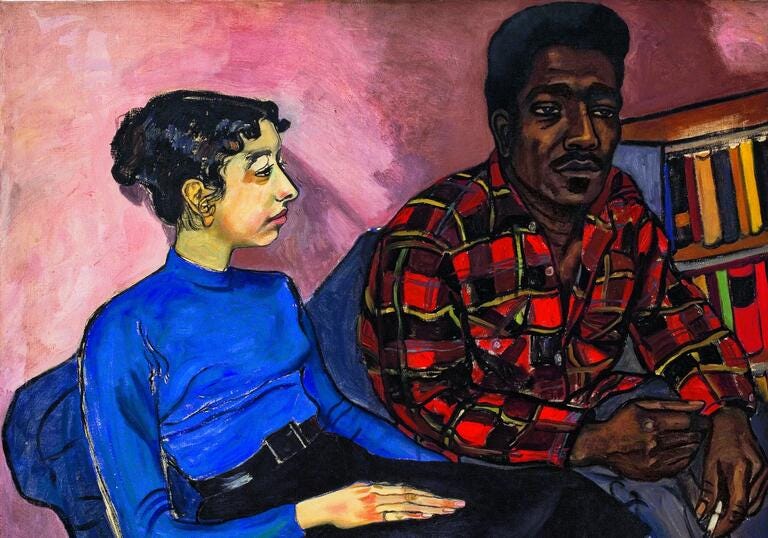
This is the move strategy keeps refusing to make: becoming specific enough to risk being wrong, because that is the price of being true.
We need to be more customer-centric. Which customer? Which moment? Which specific failure on a Tuesday morning made someone in Stuttgart close their laptop and decide they were done with you?
Generality is a failure to care. It is the language of people who have not looked closely enough to be moved. And if your strategy could just as easily belong to your competitor, it may be more alive there than in your own company.
Dirty realism in leadership starts here: name the specific thing, the actual person, the Tuesday.
Two.
Attention is a moral act. Break the flattery contract.
For most of the history of painting, portraiture had a very simple contract. The sitter paid, and the painter made them look better than they actually were. Younger, slimmer, more noble, more important. The portrait was basically a transaction in flattery, dressed up as art.
Lucian Freud broke the contract. He sat with his subjects for hundreds of hours — not days, hundreds of hours and painted them exactly as they were. Flesh as flesh, mottled, slack, real. A duchess looking exhausted. His own mother in the years after his father died, painted again and again as she sank into grief. Elizabeth II with the jaw of someone who has held a position for too long.
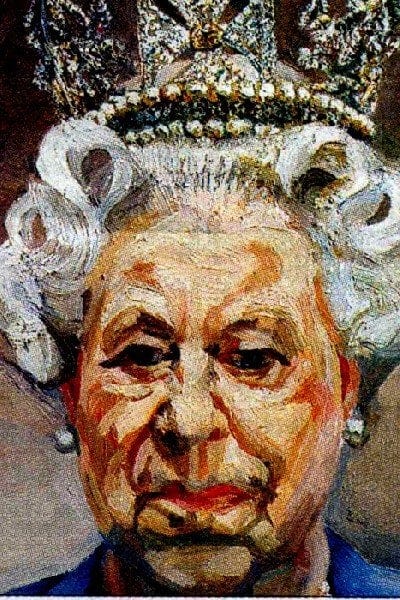
People sometimes read this as cruelty, but honestly, it is the exact opposite. To look at someone that closely, for that long, without prettifying them, is a form of devotion that most relationships in our lives never come anywhere near.
Freud loved his subjects by refusing to make them easier to look at, by giving them the dignity of being properly seen rather than the small flattery of being improved. And of course he was deeply unfashionable for decades: too cold, too clinical, too unkind, the critics said.
They mistook honesty for hostility. Which is, by the way, a very common mistake we still make every single day. Corporate vocabulary is built on the old flattery contract. Rightsizing. Synergies. Journey. Headwinds. Realignment.
These words exist precisely so we don’t have to see what we are actually doing or what is actually happening to people.
They are euphemisms. And euphemism is the opposite of love.
You cannot care about something you refuse to see clearly, you can only manage it from a safe distance. The willingness to look at the broken thing - the underperforming team, the failed launch, the customer you lost, the colleague who is no longer thriving in the role - and describe it accurately.
Not soften it. Not catastrophize it either. Just see it at its real resolution. And then to actually say it out loud, in the room, while people are still in their chairs. This will make you unpopular at first.
People will say you are negative, that you are bringing the mood down. They will mistake your honesty for hostility, the way they did with Freud for thirty years.
Stay anyway. That is care. Everything else is press release.
Three. Build what could only exist here.
Tadao Ando is a self-taught architect from Osaka who used to be a boxer. He learned by traveling and looking, and he built some of the most important architecture of the last fifty years by doing something deceptively simple: he made things that could only exist in the exact place they stand.
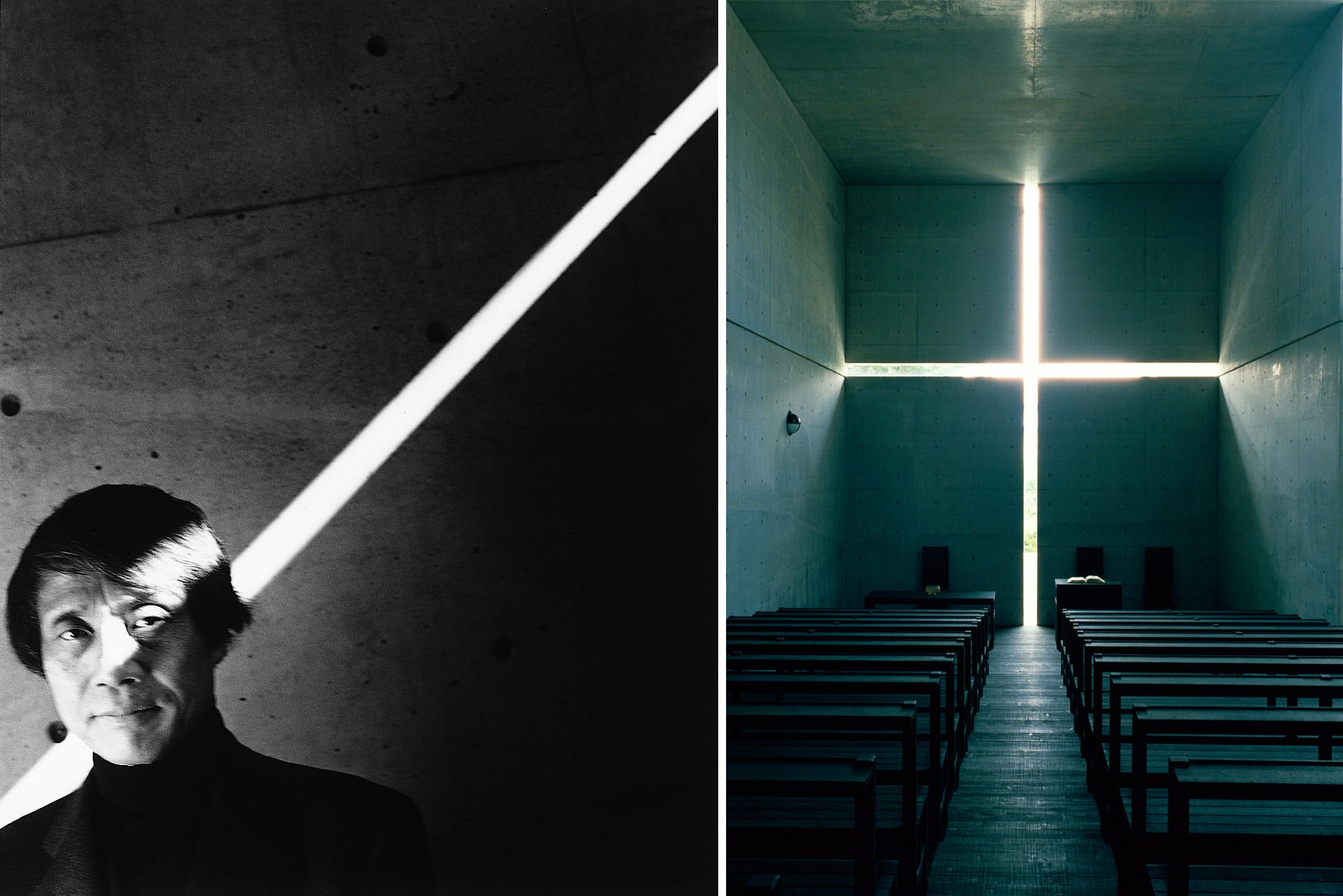
The Church of the Light in Ibaraki cannot be anywhere else, the cross-shaped slit in the wall is positioned for the specific way light enters that specific room. The Water Temple on Awaji Island only works because of that hill, that bay, the descent through the lotus pond. Move any of his buildings ten kilometers and they stop working.
And what makes his work properly radical is not just that he listens to the site. It is that he works with its faults: the slopes, the awkward angles, the difficult ground that every other architect would flatten or engineer away first thing. He treats them as the gift, not the obstacle.
The crookedness is precisely what makes the building be what it is.
And this, for me, is what transformation is actually supposed to do.
A real transformation is something that could only happen in this company, with these people, with this history, with everything that is crooked about it.
If your transformation could be lifted and dropped into a competitor’s company and still make sense, then it is not a transformation, it’s only a template. And templates do not change anything, because they sit on top of the company like a building dropped from a helicopter.
The dysfunctions you keep trying to fix. The awkward history. The legacy nobody wants to talk about. The workarounds that have somehow become load-bearing. The teams that don’t get along but somehow produce the best work anyway. These are not the obstacles to your transformation. They are its slope.
They are what the future has to be built out of, not flattened away. Ando would not be Ando if he had insisted on level ground first.
So please, stop inventing the destination. The destination is not ahead of you. It is underneath you, a trajectory of the present, waiting to be seen, including all the parts that are uneven.
What would only make sense here, with us, including our crookedness, that nowhere else could pull off? That is ambition relocated.
The future is built from the dirt of now.
From the actual ground you are standing on, from the company you actually have - not the one in the deck - from the people who are actually in the room with their histories and grudges and workarounds and quiet brilliance, from the failures you have not yet fully metabolized, from the Tuesday morning, from the crookedness, from everything that is too specific, too local, too inconvenient, too yours to scale.
That is the material. Take it seriously enough to build with, not patch over, not transcend, not strategize around. Build with. Because the future does not arrive from somewhere else. It grows out of what is already here, if you are willing to treat what is already here as worth growing something from in the first place.
That, for me, is dirty realism. The most beautiful futures are the ones that survive contact with reality.